
Tunisia is one of those rare destinations that quietly surprises even seasoned travellers. Wedged between Algeria and Libya, it sits at the crossroads of North Africa and the Mediterranean world. Compact yet extraordinarily diverse, I found it to offer a seamless blend of ancient history, striking landscapes, vibrant culture and warm hospitality.
One of the things that truly makes Tunisia special is its depth of history. This land has been shaped by Phoenicians, Romans, Byzantines, Arabs, Ottomans and the French, each leaving behind extraordinary monuments. Carthage, once Rome’s great rival, survives today more as a series of evocative archaeological fragments scattered across the hills above Tunis than as a single monumental site; its importance lies more in what it represents than its remains.
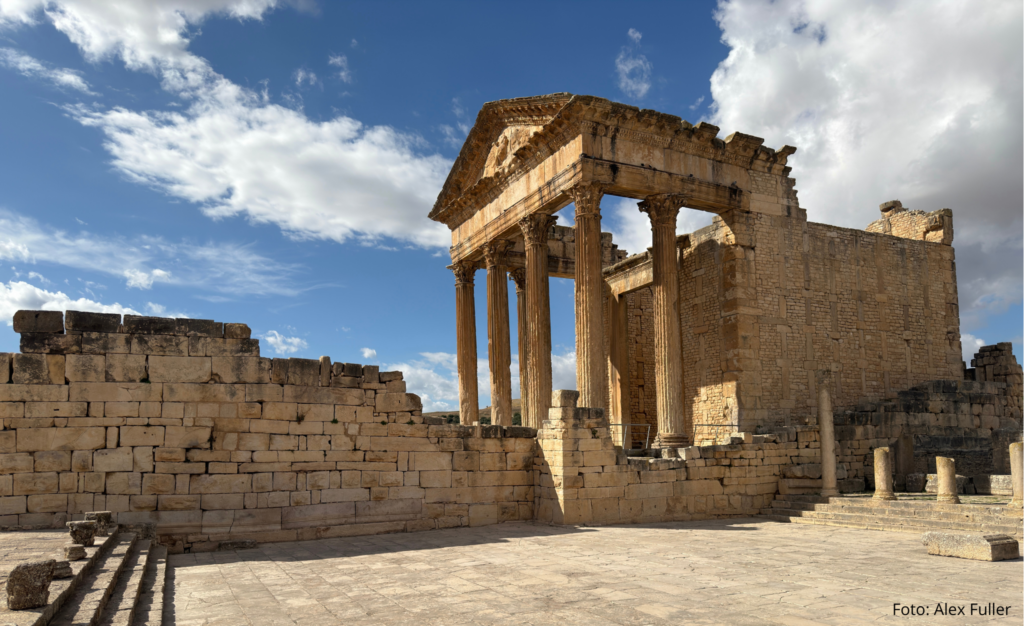
Tunisia’s Roman heritage, however, really blew me away and is revealed in full splendour at different sites throughout the country. The amphitheatre of El Djem, one of the largest ever built in the Roman world, rises unexpectedly from the surrounding plain, its scale and preservation rivalled by few sites outside Italy. In the north, Bulla Regia offers a rare and intimate insight into Roman daily life, with remarkably preserved underground villas designed to escape the summer heat, their mosaics still vivid and expressive. Nearby, the hilltop city of Dougga, often considered one of the most impressive Roman sites in North Africa, unfolds across a sweeping landscape of temples, theatres and forums, combining archaeological grandeur with a sense of serene isolation. I hadn’t expected to be able to wander these ruins almost alone, a privilege that served to further heighten their magnificence.
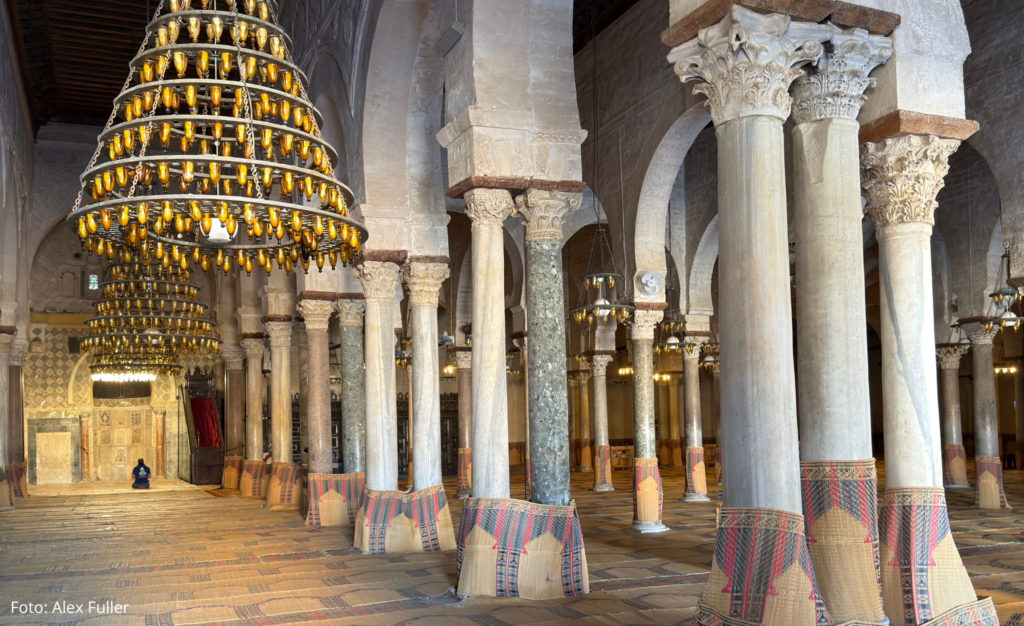
Equally compelling is Tunisia’s Islamic heritage. The holy city of Kairouan, a UNESCO World Heritage Site, is considered one of the most important cities in the Muslim world. Its Great Mosque, with its serene courtyard and ancient minaret, is a place of quiet power and architectural beauty. Across the country, historic medinas invite one to explore the maze of labyrinthine alleys for a true feast of the senses: artisans plying their craft, intricately carved and painted doors, aromas drifting from spice shops, and the sounds of commerce and everyday conversation.
The southern half of the country opens out into the vastness of the Sahara Desert, with sweeping dunes, rocky plateaus and palm-filled oases which create a region of primitive beauty. Towns such as Douz and Tozeur serve as gateways to the desert, where camel treks at sunset, 4×4 excursions across salt flats and nights beneath star-filled skies reveal a slower, more contemplative rhythm of travel.
The Berber population is concentrated mainly in the south, where communities have long adapted ingeniously to an unforgiving climate. Traditional troglodyte houses, carved into the earth or rock, were designed to keep interiors cool in summer and warm in winter, and stand as a testament to centuries of environmental knowledge. While many Berbers are gradually moving into modern housing, their culture is experiencing a quiet revival, with renewed pride in language, customs and heritage. A small number of traditional homes are still lived in and others preserved and visiting them offers a rare and evocative glimpse into a way of life that is changing but not yet lost—an experience that is unquestionably worth seeking out.
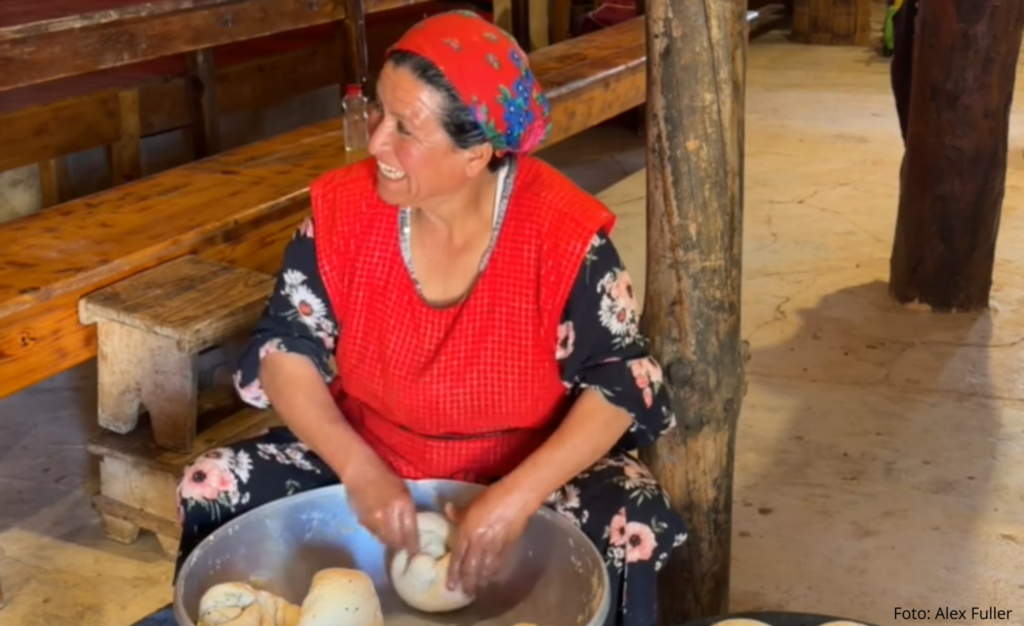
One of the most memorable aspects while in Tunisia was the genuine warmth of its people. Whether in lively city streets to quiet desert towns, I was greeted with easy smiles, curious conversation, and a sincere willingness to help. Tunisians are proud of their country and culture, and this pride frequently translates into spontaneous hospitality. One of the main reasons I am sure I will be visiting again in the near future.